Thursday, 25 October 2012

National Geographic Megastructures Megaship
She is one of the largest ships sailing our oceans as tall as ten storey building and in the year she travels two thirds the distance to the moon. This modern ship has a crew of only 22 men who have to be ready for any conditions, any emergency. The cargo must be delivered intact and in time.
Nat Geo Megafactories Mini Coupe
The workings of modern factories, beginning with the Oxfordshire plant where the Mini Coupe is manufactured, exploring the process of the vehicle's construction.
Nat Geo Megafactories Michelin
The cutting edge research and development by one of the largest tire companies in the world that manufactures everything from car and motorcycle to jumbo jet tires and now focuses on a new tire design that will increase mileage for cars.
9 Gadgets You Can't Live Without
Though some gadgets you use on a daily basis won't cause your business to fail should they suddenly disappear, a good number of them do improve your quality of life, both in and out of the office. Just a few decades ago, for example, the personal computer was nonexistent. Today PCs are integral to just about every business environment, from managing communications and customer orders to handling basic bookkeeping. 1.SMOKE DETECTOR Invented in the 1960s by Duane Pearsall, the smoke detector has proven over and over again to be a life-saving gadget, and some people would literally not be alive without it. According to an article in the magazine Popular Mechanics, Pearsall said the invention happened by accident while trying to develop a static control device intended for photo dark room purposes. 2.CLIMATE CONTROL Whether you deal with scorching summers or winter chill, stepping into a building that's a comfortable 72 degrees Fahrenheit is a luxury most take for granted. A climate control device saves your business money, too, by turning down the heat or air conditioning when the office is empty.
 3.MUSIC PLAYERS Whether you carry a personal music player or listen to music straight off your computer, you'd probably miss your digital music if it suddenly disappeared. An added benefit: Music players promote harmony at the workplace. Employees can listen to their preferred tunes without annoying their cubicle neighbors.
 4.CALCULATOR Though many can do basic mathematics in their head, most aren't skilled enough with numbers to complete complex calculations sans calculator. These gadgets provide accurate results and are huge timesavers. And not just the handheld variety -- you can find calculating help in your computer and cellphone, too.
 5.PHONE Before the telephone, humans wrote letters by hand and waited days, weeks and sometimes months for their messages to get delivered. Thanks to the invention of the telephone, and eventually the mobile phone, news can be shared instantly and from just about anywhere. As of October 2010, more than 85 percent of U.S. citizens owned a cellphone, according to a Pew Research Center report.
 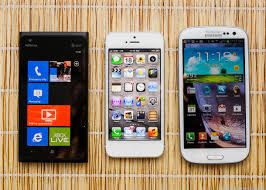 6.CLOCKS Clocks and watches are such a central part of our lives that most people probably don't even realize just how much they take this convenient invention for granted. Clocks keep us on time, let us know when it's time to go home from work, when to eat, when to sleep and when to wake up.
  7.ATM Long lines at the bank are nobody's idea of a good time. Thanks to John Shepherd-Barron's invention of the ATM, or automated teller machine, you can deposit your personal or business checks, take out cash and check your balance at any time that's convenient for you. ATMs give you access to cash 24/7 from any place you are in the world where there is an affiliated bank, from New York to Timbuktu.
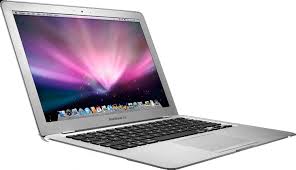
 8.COMPUTERS Sure, you grumble about Internet slowdowns, data crashes and system errors. But across all industries, computers are at the center of how businesses operate. Seriously, can you imagine running your business without one?
  9.COMPUTER MOUSE Before the computer mouse was invented, giant computers were manipulated by dozens of tiny buttons and sliders. According to the British newspaper The Independent, Stanford Research Institute's Douglas Engelbart developed the first X/Y position indicator prototype in 1964, an invention soon dubbed "mouse" for its rodent-like appearance.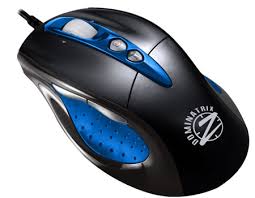
Subscribe to:
Posts (Atom)